

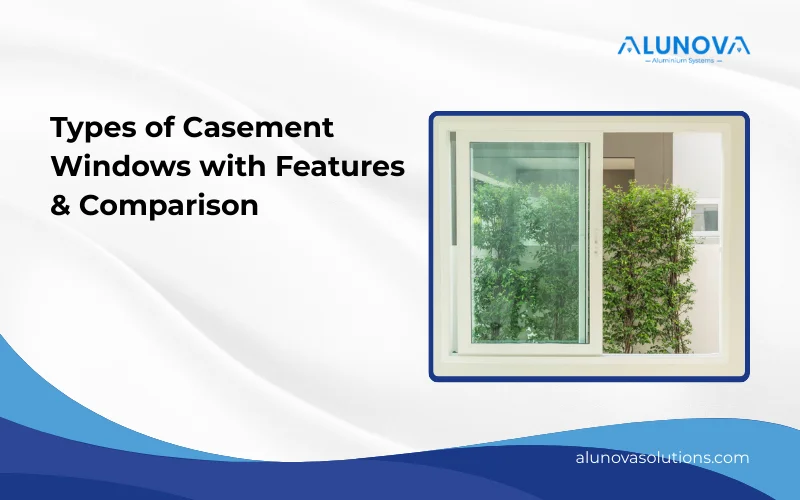
Today, different types of casement windows are available, where each window comes with its own design, opening style, and benefits. When you choose the right window style, it helps improve ventilation, brings in more natural light, and enhances the overall comfort and look of your home. Continue reading this article to learn about the various types of casement windows so that you can select the perfect window that matches your home’s design and lifestyle.
What is a Casement Window?
Casement windows are fixed to the frame with hinges on one side. They can be opened outward with the help of a handle or crank. These windows allow easy flow of fresh air and give a clear, wide outside view. Casement windows are widely used in modern homes because they are simple, practical, and available in various designs to suit different architectural styles.
Different Types of Casement Windows
Casement windows are available in many styles, where each type offers different features and benefits depending on your space and needs. The most common types of casement windows are given below:
Single Casement Windows
A single casement window has only a single panel attached to the frame with hinges on one side. It opens outward like a door. It is simple and practical casement window options that suit many home designs.
How It Works:
- The panel opens outward with the help of a handle or crank.
- Allow fresh air to enter freely.
Key Features:
- Clean and simple design
- Clear outside view
- Allows good airflow
Advantages
- Easy to open and close
- Matches most home styles
- Provides good sealing and insulation
Disadvantages
- When opened, it takes up space outside
- It may be slightly harder to clean due to its size
Cost
The price depends on the material used and the installation requirements.
When to Choose
- If you want strong ventilation
- If you prefer a wide and clear view
Double Casement Windows or French Windows
Double casement windows, also called French windows, have two panels fixed on either side of the frame. Both the panels open outward from the centre, offering a wide and balanced look. This style adds a classic touch to any home.
How It Works:
- Each panel opens with its own handle or crank.
- When both sides are opened, they allow plenty of fresh air and give a clear, wide view outside.
Key Features:
- Wide and open view
- Strong airflow
- Traditional and stylish appearance
Advantages
- Opens like a French door for a grand look
- Allows air to flow from different directions
- Ideal for larger window spaces
Disadvantages
- Costs more because of the dual opening system
Cost
- The price depends on the size, material, and installation details.
When to Choose
- If you want a broad, open view
- If you need better airflow
If you have a wide window opening to cover
Tilt and Turn Windows
They are a modern style of casement windows that first became popular in Europe. As the name itself implies, these windows can be opened in two different ways, which provides better airflow control, safety, and ease of cleaning.
How It Works:
Comes with two opening options.
- Tilt mode: The top part of the window tilts inward slightly, allowing fresh air to enter while keeping the window secure.
- Turn mode: The window opens fully inward from the side. Cleaning is easier, and the windows also serve as an emergency exit if needed.
Key Features:
- Two opening styles in one window
- Strong locking system for better safety
- Easy to clean from inside the room
- Suitable for both modern and classic homes
Advantages
- Flexible ventilation options
- Improved security with multi-point locks
- Allows indoor cleaning
- Good airflow
Disadvantages
- Mechanism is more complex and may need maintenance over time
- Higher cost compared to regular casement windows
- Needs enough space inside the room to open fully
Cost
- The price depends on size, material, and custom features. Cost more than regular casement windows because of their dual opening system.
- Windows are worth the investment due to added safety and convenience.
When to Choose
- If you want flexibility, better security, and easy cleaning.
- Work well in homes where there is limited outdoor space as they open inward.
- Suitable for bathrooms, ground floor rooms, and areas where safe ventilation is important,
- Before installing them, consider the inward opening clearance, if the indoor space is limited
How to Choose the Right Casement Window
To improve the appearance and ensure the comfort of your home, it is essential to choose the right casement window. Listed below are the key factors you may consider.
- Window Size: Casement windows are available in different sizes, so it is important to measure your window opening correctly. If your space is small, you may need a smaller window or adjust the opening. But if the opening is larger, you may need a bigger window or modify the space to ensure a proper fit.
- Window Style: Different casement window designs include single, double, awning, and hopper styles. Some windows may open outward from the side, while others open from the top or bottom. So, the right window style depends on how much ventilation you need and where the window will be installed.
- Window Material: The material of the window affects its look, strength, and cost. Wooden windows may offer a natural and classic look, but they need regular maintenance. Aluminium windows require low maintenance.
- Energy Efficiency: Energy-efficient windows help maintain indoor temperature and reduce electricity bills. A window with good insulation can make your home more comfortable throughout the year.
The Bottom Line
It is important to select the right window style when designing your home because there are various casement window styles with their own benefits in terms of ventilation, appearance, and functionality. So, get a proper understanding of the different types of casement windows, and then choose a design that fits your space and lifestyle.
Frequently Asked Questions on Types of Casement Windows
Which type of casement window is best?
Among the various casement window options, double casement windows are a popular choice because they provide wide ventilation, better airflow, and clear outdoor views. If made with durable materials, they require low maintenance, are energy efficient, and offer good security.
Are tilt and turn windows better than regular casement windows?
Tilt and turn windows come with two opening options. They offer better sealing for energy efficiency and easier cleaning from inside, making them suitable for modern or multi-storey homes. However, they are more expensive than regular casement windows.
What is the cost of casement windows?
In India, the cost of casement windows usually ranges from ₹350 to ₹750 per square foot. On average, uPVC or aluminium options may cost around ₹500 to ₹650 per square foot. The final price depends on material, glass thickness, size, and customisation. Premium designs or high-end specifications can cost more than ₹1,000 per square foot.
Are casement windows energy efficient?
Yes, casement windows are known for their energy efficiency. When closed, the sash presses firmly against the frame, creating a tight seal that reduces air leakage. They help limit heat loss or heat gain, keeping indoor spaces comfortable and lowering energy use.
Which casement window is best for small rooms?
Single casement windows are a good option for small rooms. With a single opening panel, they allow proper airflow and do not take up much space. These windows open outward and provide ventilation and clear views, making them suitable for compact bedrooms, bathrooms, or kitchens.