

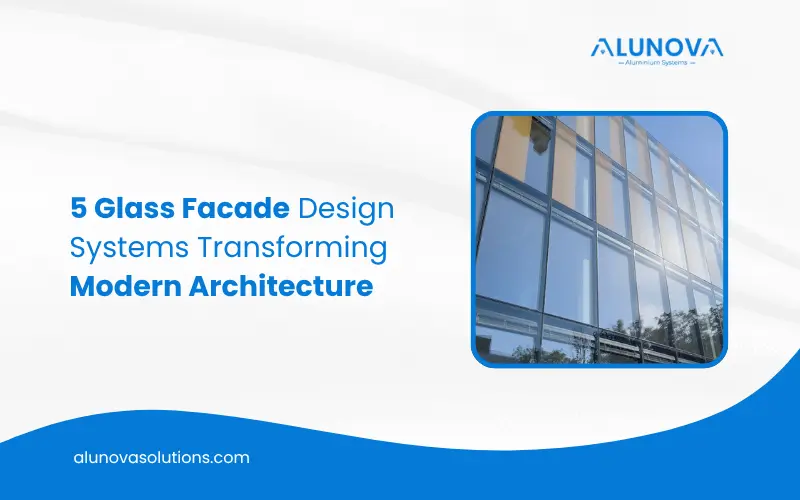
Just walk through any modern business district, and you will notice something immediately. The buildings that grab your attention aren’t necessarily the tallest ones. They are the ones that seem brighter, cleaner, and more sophisticated.
And what creates that effect? Often a protective wall. It can create one’s initial impression about a building. The facade of a building also affects its energy efficiency. Most importantly, the facade shapes how people experience the space once they enter it. The main reason glass facade design has become a primary construction solution today is that it’s the most commonly used facade system, providing both aesthetic and functional solutions for buildings.
Whether in a high-end office building, a luxury hotel, a retail showroom, or a commercial office complex, buildings with glass facades provide the ideal solution for balancing visual appeal and functionality.
In this article, we will review the primary types of facade systems available today and what makes each system the most widely used type of facade in modern architecture.
Why Glass Facade Design Is Becoming the First Choice for Modern Buildings
The traditional concrete finish tends to create a heavy, solid appearance, while the glass facade provides visual, natural daylight and transparency.
Apart from the visual appeal of the glass facade, some of the practical benefits are:
- Increased daylight penetration
- Improved energy performance
- Improved visual aesthetics of the building
- Increased design flexibility
- Decreased dependence on artificial lighting
- Increased property value
There is a shift by architects today towards looking for facades that are not only the exterior of a building but also have an impact outside of just covering a structure. The goal is for a building envelope to provide a benefit to the building by improving its comfort, performance, and sustainability. Modern glass facade systems provide that.
Curtain Wall Facade Systems
Among all facade types, curtain wall systems are commonly the most widely used when constructing commercial buildings. Unlike traditional wall systems, curtain wall systems do not bear any structural loads from a building – they are attached to the building’s structure and only provide support for their own weight. Curtain walls allow architects to design large glass areas while still being structurally efficient.
Common project types using curtain walls include:
- Office buildings
- IT parks
- High-rise commercial buildings
- Mixed-use developments
Due to their clean lines and maximisation of natural daylight, curtain walls have become a preferred design option for new building projects.
Unitised Glass Facades
For projects where quick turnarounds and consistency are important, unitised facade systems are an excellent option. Unitised facade systems are created in the factory as complete assemblies before being put up on site.
The benefits of using a unitised facade system include the following:
- Faster installation
- Better quality control
- Less time spent on building
- Higher weather resistance
Commercial building developers often choose unitised facade systems because they simplify the construction process, assuring a consistent level of quality in the final design.
Frameless Glass Facades
There are not many things in architecture that can create such an upscale look as using frameless glass. Systems that use frameless or skinned (non-structural) installations minimise the amount of visible frame around the glass, allowing for a continuous and unbroken plane of glass to be visible.
The many advantages of using frameless or skinned installations include:
- Better clean-lined appearance
- Improved light quality entering the space
- Modern, current aesthetic appeal
- Improved visual connectivity to the surrounding environment
Frameless or skinned installation types of glass facade designs are particularly popular in high-end commercial space applications, including showrooms, hotels, and high-end office developments.
Solar Control Glass Facades
Maximising natural light is very important when it comes to controlling heat gain in warm climates. Solar control glass will lower the amount of solar heat entering a building but will still allow daylight to enter through it.
Its key benefits are the following:
- Reduced cooling expense
- Less glare
- Improved comfort
- Improved energy performance
For commercial buildings that want to improve their sustainability and operational efficiency, solar control facades are a popular solution.
Sustainable High-Performance Facades
Sustainability is becoming an important focus of modern construction. Many of the advanced glass facades and designs that are currently being used in construction will integrate many of the following performance functions:
- Thermal Insulation
- Solar Control
- Acoustic Comfort
- Energy Efficiency
- Durability
The high performance of these systems can greatly reduce the energy consumed by a building, while also providing occupants with a healthier indoor environment. A large number of green-certified buildings have developed and utilised advanced glass facades to achieve their sustainability goals.
Things to Consider Before Installation
Before selecting a facade system or a glass facade design, it is important to go through several factors:
- Climate and weather conditions
- Energy-efficiency requirements
- Safety standards and building codes
- Maintenance needs
- Type of glass and glazing system
- Structural support requirements
- Long-term durability
Working with experienced professionals ensures that the facade not only looks impressive but also performs effectively for years.
Key Takeaways
Glass facade design is not just an architectural feature, as it also contributes to appearance, performance, and long-term value. By designing and constructing glass facades for buildings, you are turning a normal building into an eye-catching landmark. A well-designed glass facade provides natural daylight into a building and helps convey a contemporary image that creates an outstanding first impression.
Whether you are looking to build a new commercial facility, renovate an existing office building, or upgrade your retail space, a well-designed and executed glass facade will help you strike the right balance of style, function, and efficiency. Creating a lasting first impression begins with the exterior of your building and continues to be a vital tool in achieving success within today’s competitive environment.